Supervisable AI Systems
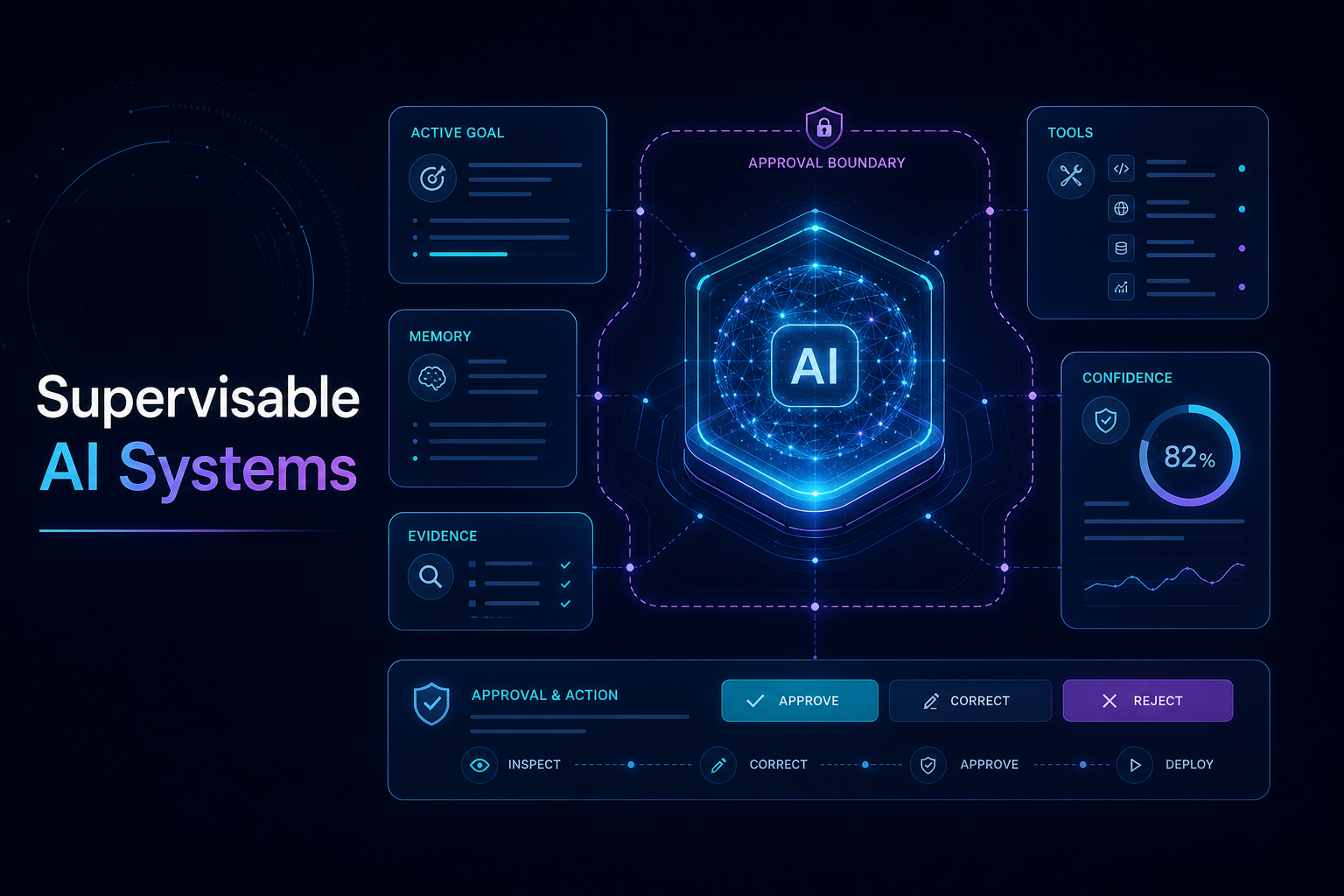
Supervisable AI Systems
The systems I want to build are not just autonomous. They are supervisable.
That word matters. A capable model can produce impressive answers. A useful agent can act across tools, memory, and time. But a trustworthy system has to let a person understand what it is doing before, during, and after the action.
Supervision is not a slowdown. It is infrastructure.
The Problem With Hidden State
AI products often hide the most important parts of the system:
- What the model thinks the user wants.
- Which memories shaped the response.
- Which tools are available.
- What changed after the last correction.
- Where uncertainty is still high.
When those details stay invisible, the interface asks the user to trust a performance instead of supervising a system.
That is backwards. The more capable the agent becomes, the more visible its state should be.
Memory Needs Receipts
Memory is only useful when it can be inspected.
If an agent stores a preference, it should know where that preference came from. If it updates a durable fact, it should keep the source. If it infers something from behavior, it should label that inference differently from something the user explicitly confirmed.
I think about memory in four layers:
- Facts: durable information with a source.
- Preferences: user-specific patterns that can change.
- Instructions: constraints the system should follow.
- Hypotheses: useful guesses that should not become truth too quickly.
Without that structure, memory becomes a junk drawer. With it, memory becomes something a person can review and correct.
Intent Should Be Measured
An agent is always carrying an idea of what the user wants. Sometimes that idea is explicit. Sometimes it is inferred from a messy conversation.
The question is whether the system can notice when its idea of intent is drifting.
For a one-shot response, that may not matter much. For a persistent system, it matters a lot. The agent should be able to compare the current working intent with the user's stated goal, the active constraints, and the recent correction history.
If the system cannot measure intent, it cannot know when to pause.
Good Interfaces Create Control
The interface is where supervision becomes real.
A good AI interface should show:
- The active goal.
- The evidence being used.
- The memory being retrieved.
- The tools being considered.
- The confidence level.
- The next irreversible step.
That does not mean every screen needs to be noisy. It means the system should reveal the right layer at the right time. Calm design is not decoration. It is part of the control surface.
Autonomy Still Needs Boundaries
The point of agents is not to remove human judgment from everything. The point is to move repetitive work into systems that can be guided, inspected, and corrected.
That requires boundaries:
- Some actions should always require approval.
- Some memories should expire.
- Some tool calls should be logged.
- Some state changes should trigger review.
- Some goals should be refused.
Autonomy without boundaries turns capability into risk. Boundaries make capability usable.
The Direction
I keep returning to the same thesis: useful AI systems need durable memory, measurable intent, and interfaces that make supervision natural.
The frontier is not just a smarter model. It is a system that can explain its state, accept correction, and stay aligned with the person using it.
That is the kind of AI infrastructure worth building.