Hermes Agent Desktop: The Self-Improving AI That Can Run Your Life
Hermes Agent Desktop: The Self-Improving AI That Can Run Your Life
Primary sources: Hermes Agent site, GitHub, Docs.
Hermes Agent from Nous Research has been one of the most exciting developments in open-source agentic AI this year. The recent release of its official native desktop app for macOS, Windows, and Linux changes the game for anyone who wants a truly capable, always-on personal agent without living in the terminal.
What Happened
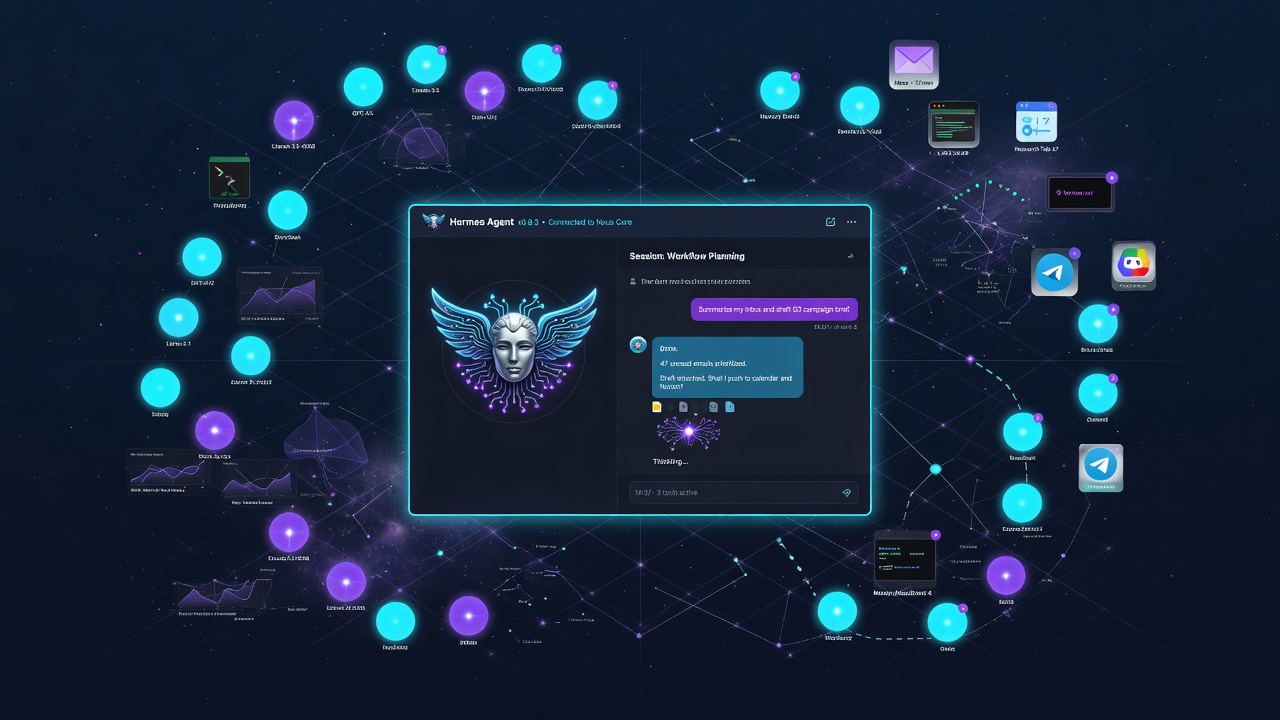
Nous Research launched the Hermes Desktop app in early June 2026 as a public preview. It's a native Electron + React frontend with the same Python agent core you get from the CLI. Everything — config, memory, skills, sessions, plugins — syncs seamlessly between the GUI and terminal or messaging gateways.
The app gives you a proper chat interface, file browser, voice mode, settings panels, skills manager, cron scheduler, profiles, and command center for multi-agent work. You can drag and drop files, preview tool outputs in a side rail, and switch models on the fly.
Hermes itself is model-agnostic. The standout path is Nous Portal, which surfaces 300+ models under one subscription while bundling the Tool Gateway (web search, image generation, TTS, browser automation).
Why It Matters
Most "agentic" tools are either:
- Locked into a single model or IDE
- Terminal-only (friction for most people)
- Shallow wrappers without real memory or self-improvement
Hermes is different because of its closed learning loop:
- Persistent memory that actually grows across sessions
- Automatic skill creation from experience
- Skills that improve themselves during use
- A deepening model of you (preferences, style, projects)
Add the plugin system (drop Python directories with plugin.yaml + code into ~/.hermes/plugins/ to add custom tools, hooks, slash commands, or even new platforms) and the ability to delegate to sub-agents, and you have something that can genuinely extend into your entire workflow.
It runs where you want it — local, Docker, SSH, or serverless backends like Modal that cost almost nothing when idle — and you can talk to it from Telegram, Discord, Slack, email, or the desktop app. One agent. One memory. Every surface.
My Take
This fits squarely into the Oxygen AI worldview.
The best agents won't be flashy chatbots. They'll be quiet infrastructure that remembers, learns its own tools, and stays aligned because the memory and skill systems are explicit and inspectable.
Hermes nails several things that matter:
- Memory as first-class: Not just RAG, but a living system that nudges itself and builds reusable skills.
- Extensibility without forks: Real plugins and the open skills standard mean the community (and individuals) can make it do anything.
- Model freedom: 300+ options via Portal, plus easy local or self-hosted routes. No lock-in.
- Desktop reality: The new app removes the biggest adoption barrier while keeping the power of the underlying agent.
- Control surface: Between the file browser, voice, scheduling, and gateways, it can actually touch your life instead of just talking about it.
There are still rough edges (cost management with powerful models, security model for broad tool access, the learning curve of profiles and skills). But the trajectory is clear: this is one of the most promising foundations for a personal, agentic operating system.
What I Am Watching Next
- How the skills ecosystem matures — community-contributed skills via agentskills.io or the built-in hub could become the real killer feature.
- Desktop app polish around multi-agent orchestration and the Command Center.
- Deeper local model support and cost-efficient routing between cheap/fast and powerful models.
- Security and approval UX as more people give it real computer use and browser control.
- Whether Nous Portal's bundled tools (search, browser, image, TTS) become the default "just works" layer or if self-hosted equivalents catch up.
If you're serious about agentic workflows that go beyond prompting, Hermes (especially with the desktop app) is worth installing today. The combination of self-improvement, extensibility, and reach across your devices and services is currently unmatched in the open-source world.
Links:
- Official site & desktop download: https://hermes-agent.nousresearch.com/
- GitHub: https://github.com/NousResearch/hermes-agent
- Docs: https://hermes-agent.nousresearch.com/docs/